Sunday, October 31, 2010

Gatas x Carros (parte 4)


Veja Mais: Carangas Mineiras


História e evolução da VW Brasília

O Brasília foi um automóvel produzido de 1973 até 1982 pela Volkswagen do Brasil. (Definido internamente como modelo/tipo "102") Foi projetado para aliar a robustez do Volkswagen Fusca, um carro consagrado no mercado, com o conforto de um automóvel com maior espaço interno e desenho mais contemporâneo. Era um carro pequeno, de linhas retas e grande área envidraçada. Esse nome é uma homenagem à então moderníssima cidade do Distrito Federal, fundada 13 anos antes com o mesmo nome.

História e evolução

O Brasília foi um dos primeiros Volkswagen a serem projetados e construídos fora da matriz alemã, sendo o também brasileiro SP2 o primeiro. O então presidente da Volkswagen do Brasil, Rudolph Leidig, inspirado pelo SP2, desafiou os engenheiros da marca a produzir uma nova versão do Fusca, porém adaptado ao mercado nacional. O modelo deveria oferecer mais espaço, deveria utilizar a mesma mecânica, porém deveria parecer mais contemporâneo. Após uma série de protótipos, finalmente José Vicente Martins e Márcio Piancastelli apresentaram o conceito do que seria o modelo final. Semelhante à uma "mini-Variant", com uma versão modernizada da dianteira desse veículo, era 2 centímetros menor do que o Fusca, porém com o mesmo entre-eixos, maior espaço interno, ampla área frontal envidraçada, satisfatório porta-malas dianteiro e uma prática tampa hatchback para o porta-malas traseiro. O design retilíneo da carroceria, com linhas suaves e equilibradas foi inovador na época. Esta característica privilegiava um amplo espaço interno para os passageiros, algo difícil de se encontrar na época em carros do segmento do Brasília.
Quando este modelo alcançou a fase de testes, um repórter conseguiu fotografar alguns modelos em ruas próximas à fábrica. Os seguranças tentaram afastá-lo, e quando falharam, decidiram atirar contra seu carro. O incidente causou alguma comoção na imprensa nacional, levando a Volkswagen a se desculpar publicamente. Entretanto a notícia alavancou a venda da revista Quatro Rodas que comprou as fotos do então repórter free-lancer Cláudio Larangeira, que logo depois seria contratado pela revista.[1].
O novo veículo foi oficialmente apresentado ao público em Junho de 1973, apenas um mês depois do lançamento de seu principal concorrente, o Chevrolet Chevette.
Embora seja muito semelhante a outros modelos, tais como a Volkswagen Variant e o TL, a plataforma era na verdade a mesma do Fusca, com o mesmo motor boxer montado na traseira e refrigeração a ar.


A História dos Lowriders

Lowrider


Lowrider são os carros com o sistema de suspensão modificado e que anda tão junto ao chão quanto possível.
Atualmente se usa mais a suspensão hidráulica, mas mesmo assim os mais saudosistas apenas retiram as molas da suspensão. A cultura Lowrider surgiu nas periferias dos Estados Unidos, na divisa com o México. Por pessoas comuns que queriam ser diferentes assim colocavam sacos de areia ou sacos de pedra no porta-malas de seus Chevrolet Impalas, dando assim origem ao Lowrider.

História

Na década de 50 nos estados unidos mais precisamente no estado da califórnia varias customizações dos automóveis foram proíbidas pelas autoridades locais, impedindo então de usarem carros rebaixados, a fiscalização na época media apenas a altura então logo foi inventado sistemas que abaixavam e levantavam os automóveis permintindo ter um veículo rebaixado e dentro da lei quando fosse vistoriado.Hoje em dia, muita coisa não mudou, no Brasil os LowRiders são um numero pequeno, mas que por onde passam despertam a curiosidade de quem nunca viu.Os Lowriders não só encostam a carroceria no solo, mas também executam manobras como saltos ou andam em 3 rodas (Three Wheel Motion), existem também competições especializadas para medir qual a altura o carro chega.

Características

O lowrider tem como características básicas carros das décadas de 50 a 70 (Geralmente um Chevrolet Impala) sem nenhum tipo de costumização externa com exceção a pintura, da capota conversível e das rodas reforçadas para a suspensão. A suspensão hidráulica do Lowrider não é a ar, mas sim, pneumáticas alimentadas pelas baterias que vão no porta-malas (geralmente 8)e o dono do carro controla a suspensão com um conjunto de chaves que controlam a altura de cada roda do carro, sendo possível fazer o carro pular ou andar sobre 3 rodas (essa manobra de andar sobre 3 rodas chama-se "Three Wheel Motion). Hoje em dia muitos rappers americanos agregam aos veículos rodas banhadas a ouro, diamantes em alguns detalhes, ou até mesmo pintura do motor banhada a ouro.

Impala LOWRIDER no Brasil! (alta qualidade) "carro que pula" 


BONAFEDE HITS SWEET SPOT IN EAST LONDON

A convincing class win from pole position by Gennaro Bonafede in the opening Bridgestone production car race was the highlight for Team Ferodo of the penultimate round of the WesBank Super Series at the East London grand prix circuit on Saturday.

The 20-year-old Pretoria University student and his Ferodo Volkswagen Golf GTi were in fine form right from the first practice session on
Friday and carried the momentum through to Saturday, where Bonafede earned pole position on the starting grid for the first of the day’s two back-to-back sprint races and also for the all-important feature race with its double points.

Bonafede overcame a spirited challenge from Heinz Bose (Mazda3) to take his third race win of his first season in production cars by 0,190 sec.  With the top six finishers from race one starting race two in reverse order, the Bridgestone production car rookie was sixth on the grid for the second six-lapper.  Contact with the similar car of championship leader Graeme Nathan saw Bonafede go off in the complex and drop to seventh place early in the race.  He recovered well to finish third at the chequered flag.

There was every reason to be confident of a good result in the feature race and a chance to leapfrog second-placed Gary Formato in the championship with one race meeting remaining.  But the misfire that had plagued his more recent races returned just as the team was getting ready for the final race of the day.  There was no time to change the engine and Bonafede was forced to take up his pole position on the grid with an engine running on three cylinders.

He was predictably swamped by the field on the first lap and struggled on in a vain attempt to score championship points, finally finishing 10thand four laps down.

Ferodo team-mate Devin Robertson had no luck at all.  After arriving late for practice on Friday because of matric exam commitments, the 18-year-old from Alberton qualified a respectable third despite experiencing a problem changing gears.  His bad luck with the traditional draw for grid positions saw him start both races from sixth place.

He continued to struggle with the Polo’s gearbox in race one and finished fifth.  The team replaced the gearbox for race two and he ended an unrewarding weekend with a second successive fifth place finish.

The final round of the championship is at Kyalami on November 27 and 28, when the WesBank Super Series will share top billing with the international Superstars Series for V8 production cars.


STORY COURTESY OF PETER BURROUGHES COMMUNICATIONS

IT'S HERE, ALL NEW 2010 VOLVO S60


If there’s one model range of car that defines what Volvo stands for it’s the S60. Two generations ago the car went by the 850 moniker and spawned such legends as the 850 R with its signature yellow hue and black rims. Since then the S60 name has largely been associated with ageing nameless people whose life revolves around dropping children off at school, wearing grey suits, eating vegetables and picking up the kids from school.


Not that any of these pursuits are ignoble: it’s just that none of them scream fun. Or exciting. Or exhilarating. Words like these have been used to describe one or two models against which the all-new Volvo S60 is pitting itself. All three are German, all three are the bread and butter models in their companies. You know the ones I’m referring to.

This time though, Volvo has brought out its biggest guns as a means of recapturing some of its old magic. Despite being offloaded by previous owner Ford to Geely, one of China’s most successful car companies, Volvo seems to be gliding along just fine in terms of new and updated product. In fact, I’d say the Swedish brand has not seen such an awesome product renaissance since, well, since the 850 actually.

A claim was made that the new S60 is as good, if not better, than its three main rivals. That’s as far as the driving experience is concerned. A brisk drive along the southern coast line revealed the truth: Volvo’s claim is true. I accelerated, braked, turned, slowed down, curved and sliced through every type of road and came out highly impressed. Yes, one of the Germans has not been matched but the other two have. And this by a front-wheel-drive (FWD) Volvo nogal.

Spec wise the car is 4.6 metres long, 1.87m wide, has a wheel base of 2.8m and is 1.5m high, in total. It fits into the genre. Which brought up my question at the Volvo S60 launch: if the S60 competes with the Audi A4, BMW 3 Series and Mercedes-Benz C-Class, then where does the S40 fit in? It was said that the S40 is one of the entry points into Volvo, sort of like a grown-up C30. It is positioned below the S60 and its prices reflect as much.

Steering feedback is more precise, more engaging than in any other Volvo I have driven, even in the two front-wheel-drive models which typically showed some understeering when pushed. Two chassis choices are available in the international market, but Mzansi only gets the stiffer choice. I suppose we are a country that prefers a sportier ride than the Chinese middle class for example, who place comfort and prestige above all else. Not to say the S60 rides hard, since we could not make a direct comparison during the drive. Seats are lush with soft leather housing and were very comfortable.

The interior is quite familiar. New Volvos feature the single metal frame in the centre. It runs from the top of the dashboard down to the centre console where it encases the gear lever and cup holders. Materials used are soft and feel like high quality stuff at the touch of the hand. Dials are clearly visible and each function can be accessed with ease. All three models I drove feature a new colour screen with information about all sorts of stuff, like satellite navigation, the music system, petrol/ diesel consumption and other useful info.

Three models, as earlier explained, are on the price list for our market. The rest will be sent through in 2011. At entry is the 2.0T with a four-cylinder petrol turbo engine. Its power is 149kW made at 6000rpm, while peak torque is 300Nm between 1750rpm and 4000rpm. For now we only have it in 6-speed manual guise and that will help it attain a 0 – 100km/h time of 7.7 seconds, according to Volvo. Top speed is rated at 235km/h. Average fuel consumption of 7.9 litres per 100km and C02 emissions are 184g/km.

Step up and you find the D5, a delicate machine made of turbo diesel power, common rail direct injection technology and a 6-speed automatic gearbox. It’s a 2.4-litre 5-cylinder type with 20 valves, 151kW at 4000rpm and 420Nm between 1500rpm and 3250rpm. Customers will love it for its smooth operation and its frugality, certainly the two most apparent talents I uncovered during 100km slip. Very little argument can be made against its power numbers as well as its fuel consumption figure, said to be 6.3 litres per 100km. Greenies will also be pleased with its C02 status of 166g/km, while performance fundis won’t be disappointed with its claimed 0 – 100km/h time of 7.8 seconds and the 230km/h top speed.

Topping the new S60 range is the new T6 whose strength comes from a 3.0-litre petrol turbo with a rather forceful 224kW at 5600rpm and maximum thrust of 440Nm between 2100rpm and 4200rpm. Acceleration feels urgent but composed, thanks to Volvo’s all-wheel-drive (AWD) system and the 6-speed Geartronic gearbox. Volvo says 6.5 seconds is all that’s needed to reach 100km/h from standstill, and that the highest speed that can be attained by the T6 is 250km/h. Being a more feisty customer, the T6 does not rate fuel consumption that highly, as evidenced by the average figure of 9.9 litres per 100km and C02 emissions of 231g/km.

Volvo’s slogan for the new S60 includes the word “naughty” and the T6 is the naughtiest of them all. What really excited me about the car is that it really is up there with the best of the lot in its class as far as power, performance and panache are concerned.

This being a Volvo, safety is a given parameter from as early as the design stages. Therefore you’ll find airbags, whiplash protection, dynamic stability control, ISOFIX attachments for the rear seats, ABS and adaptive brake lights among the long list of standard safety equipment. Unfortunately safety bits such as the blind spot information system and the lane departure systems which were pioneered by Volvo, are sold as optional through the entire range. The flagship pedestrian detection system which can detect pedestrians and apply brakes in time to avoid slamming into them – depending on the car’s speed, is also optional at R18 600.

In order to take on the best you need the best car. This is undoubtedly Volvo’s best sedan so far as it ticks all the relevant boxes with such ease, one would think it’s been leading this class for years. No doubt buyers wanting to enter the segment will glance over Sweden side and discover something as good as what is offered in Germany.


2010 Volvo S60 Pricing
(Includes VAT and C02 Taxes)
2.0 T manual (R355 500)
2.0 T automatic (R371 900)
D5 (R408 000)
T6 (R464 000)

História do Tuning


A arte de alterar automóveis é já bastante antiga, a sua origem mistura-se com a origem dos automóveis.
Foi na década de 1910, praticamente quando se deu o grande aumento do número de automóveis e a sua produção
em série, que as primeiras pessoas começaram a alterar os motores dos famosos Ford Modelo T para obter mais potência.
Sempre houve e haverá assim, pessoas que não estão contentes com o que o desempenho e aspecto do seu automóvel.
Depois da Segunda Guerra Mundial este movimento intensificou-se nos Estados Unidos e na Europa e surgiram as
primeiras empresas dedicadas à preparação de carros e motores.
História Um movimento que teve grande notoriedade foi o hot rodding.
Surgiu na década de 1940, no final da guerra. Os jovens militares americanos que regressavam ao país e com algum dinheiro,
que gozavam alguma liberdade tinham disponíveis carros da década anterior a um preço bastante acessível.
A indústria automóvel americana tinha estado dedicada a fornecer o exército durante alguns anos e não tinha evoluido.
Assim esses jovens, inicialmente na Califórnia, começaram a modificar os carros, introduzindo elementos que ainda hoje os
caracterizam os hot-rods como o menor peso, maior potência, rebaixados, pneus largos, etc. O nome Hot-rods provém da combinação de Roadster (rod) e
Hot que significa quente. Anos mais tarde deu-se mais relevância ao aspecto e construíram-se alguns carros verdadeiramente virados para o show-off.
História Com o tempo algumas empresas foram criadas especificamente para a preparação de carros, nos EUA e Europa, algumas delas criando nomes que
ainda hoje são bastante conhecidos. Em meados da decade 80, e com o sucesso do campeonato alemão de Turismos (DTM) onde viaturas de produção competiam
dando muito espectáculo, contribuiu de forma decisiva para o desenvolvimento do tuning no continente Europeu. Os vários troféus monomarcas e campeonatos
criados nos vários países contribuiram tambem para o desenvolvimento do tuning. Os adeptos de automóveis procuravam peças e componentes usados em competição
e que dessem um aspecto parecido esteticamente ao do seu carro preferido de competição, pois algures haveria um BMW, um Mercedes, um Alfa Romeo, um Renault
a competir que inspirava os utilizadores dos automóveis normais. Cada país ou continente desenvolveu um estilo próprio e sub-culturas que se movem em torno
de automóveis modificados. O mercado do tuning é hoje em dia um setor que movimenta muito dinheiro. O sucesso dos filmes da saga Fast and Furious contribui
também para a divulgação do tuning a um publico onde não chegava antes.

photos from Parque Nacional Calilegua

rufous-bellied thrush

dusky-capped flycatcher

black vultures

dusky-legged guan


plush-crested jay

tapir footprint


buff-necked ibis footprints

fuzzy spider

pollywogs

corzuela footprints

plush-crested jay

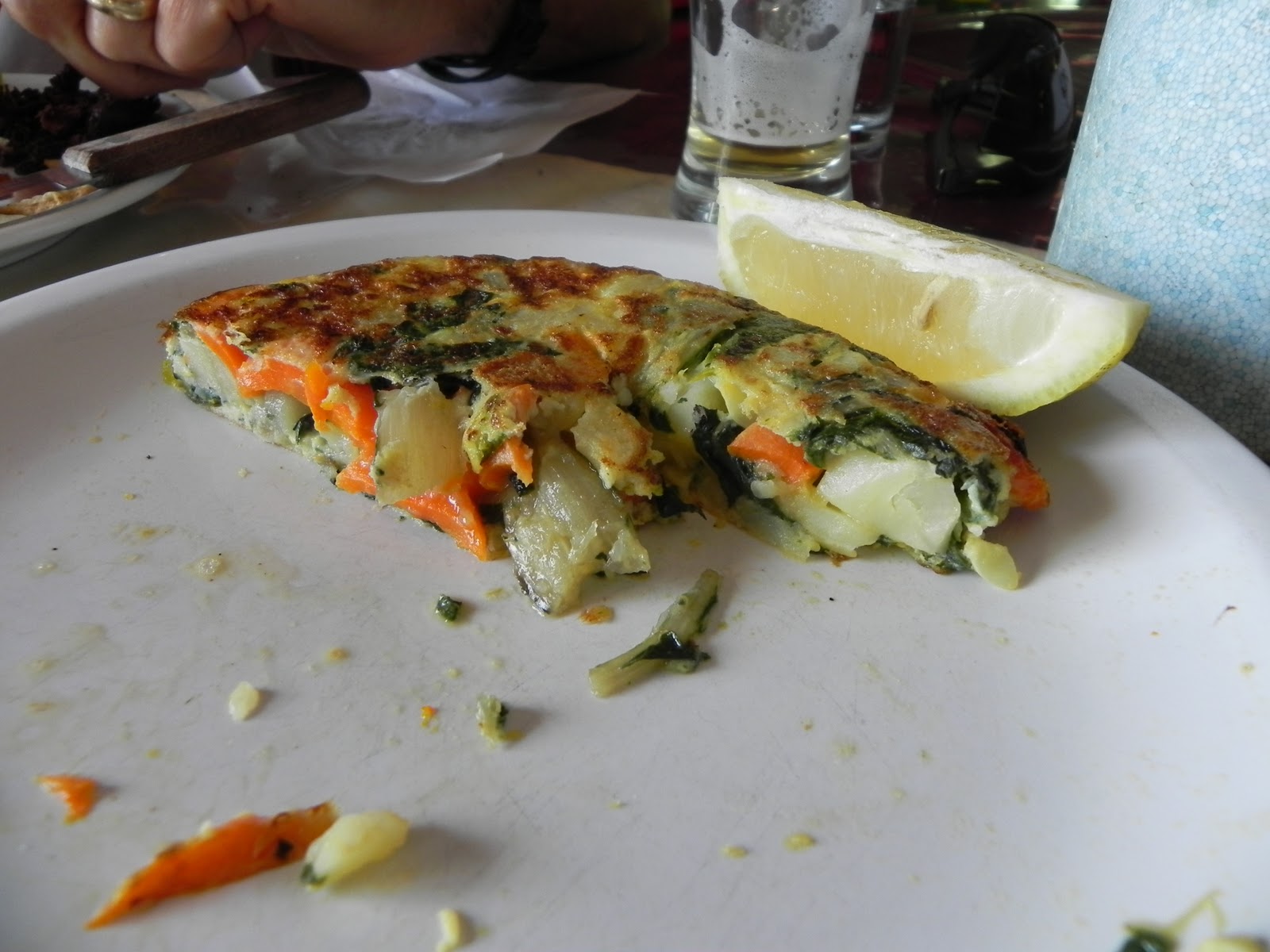
tortilla verdura

Mike listening to Raúl

photo by Raúl
Related Posts Plugin for WordPress, Blogger...